Wrap Up
Congratulations—you've worked through Beginning Guitar from the first open string to full song progressions. That's a real milestone.
What You've Learned
- Your guitar — body, neck, strings, frets, and how sound is produced
- Posture and hands — sitting position, pick grip, and relaxed technique
- Tuning — standard E–A–D–G–B–e and keeping pitch stable
- Reading tab — lines, fret numbers, and following examples in Music Buddy
- Music fundamentals — staff basics, note values, and rhythm in 4/4
- Open chords — Em, G, C, D, Am, and an introduction to F
- Strumming — downstrokes, down-up patterns, and steady tempo
- Chord changes — two-chord drills, G–D–Em–C, and pivot fingers
- Song progressions — G–C–D, Am–F–C–G, and loops you can play today
Tools to Keep Using
- Tab toggle — fretboard map when you need it
- Chords toggle — diagram shapes for every chord example
- Practice Goals — weekly targets so progress stays visible
Where to Go Next
Keep drilling the basics. Fast chord changes and clean strumming come from repetition, not new theory. Five minutes on G–D–Em–C daily beats one long session per month.
Learn full songs. Pick one tune that uses chords you know.
and are reliable next steps.

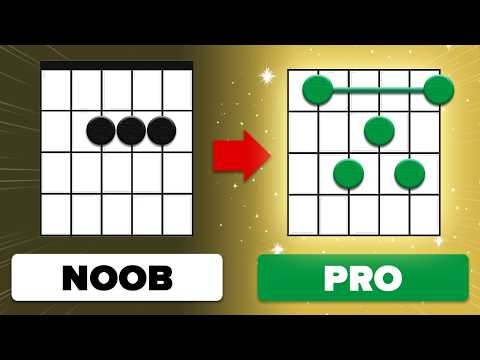
Explore barre chords. When open shapes feel comfortable, F and Bm barre forms unlock the entire neck. Take your time—barre strength builds over weeks.
Continue with Intermediate Guitar. That series covers barre chords, power chords, fretboard navigation, essential techniques, fingerpicking, and your first steps into lead playing.
One Final Progression
Play this slowly as a graduation exercise—all the chords from this series:
X:1
T:Beginning Guitar — Final Progression
K:G
M:4/4
L:1/4
"Em" E G B e | "G" G B d b | "C" C E G c | "D" D F# A d | "Am" A c e a | "G" G B d b ||
Six chords, one bar each. Loop until it feels like music—not homework.
Practice tip: Revisit any lesson that still feels shaky. There's no rule that says you graduate once. Great players revisit fundamentals forever.
Further viewing
- —open chords, barre chords, chord partials, inversions, and richer harmony
- —how to organize chord, rhythm, scale, and song work as you move beyond beginner material
Thank you for learning with Music Buddy. Now go play—and tune up first.
©Music Buddy