Reading Music Fundamentals
Tab tells you where to play. Standard notation tells you what to play—pitch and rhythm on the staff. You don't need to read like a classical pianist, but understanding the basics unlocks every example in Music Buddy.
The Staff
Five lines, four spaces. Notes sit on lines or in spaces; higher on the staff = higher pitch.
Guitar music often uses treble clef (also called G clef). Middle C and above cover most beginner material.
Note Names (Treble Clef)
From bottom line upward, the lines are E, G, B, D, F — "Every Good Boy Does Fine."
The spaces spell F, A, C, E — "FACE."
Whole, Half, Quarter Notes
- Whole note — 4 beats (in 4/4 time)
- Half note — 2 beats
- Quarter note — 1 beat
- Eighth notes — ½ beat each (often in pairs: ♪♪)
The time signature (e.g. 4/4) tells you how many beats per bar. 4/4 = four quarter-note beats per measure—by far the most common for songs you'll learn.
Rhythm on Open Strings
Count aloud: 1, 2, 3, 4 — one pluck per beat.
X:1
T:Quarter Notes on Open Strings
K:C
M:4/4
L:1/4
E, A, D G | B e D G ||
Half and Quarter Mix
Hold half notes for two beats; quarter notes for one.
X:2
T:Half and Quarter Notes
K:G
M:4/4
L:1/4
G,2 D2 | G, B, D G | B,2 e2 | B e d B ||
Play with the Metronome in Music Buddy. Steady rhythm matters more than speed. You can use the "Ramp Up Tempo" feature on the metronome to start slow and automatically ramp up the time.
Eighth Notes
Two eighth notes fit in one beat—often written beamed together.
X:3
T:Eighth Note Pairs
K:C
M:4/4
L:1/8
G, G, A, A, | D D E E | G G A A | B B c c ||
Say "1-and 2-and 3-and 4-and" while playing. The Tab toggle still shows fret numbers; the staff shows when each note happens.
Rests
Silence is written too. A quarter rest = one beat of silence. Rests keep your strumming hand honest about rhythm.
Connecting Tab and the Staff
Same music, two views. When you see a G on the second line of the staff, Tab might show the 3rd fret of the low E—or an open G string, depending on the phrase. Both are correct if the pitch matches.
(Tim Hansen)—a clear visual explanation of staff position, rhythm, bars, clefs, and time signatures.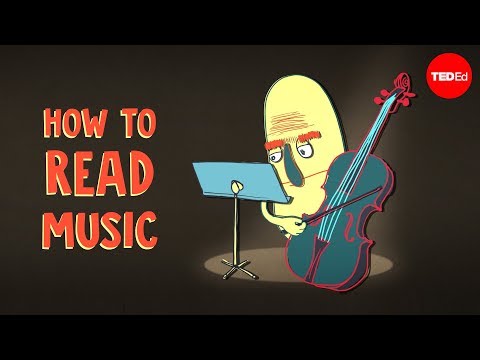
Practice tip: Clap the rhythm before you play. If you can count it, your hands will follow. Use Practice Goals to log "read and play 3 examples" as a weekly target.
Further viewing
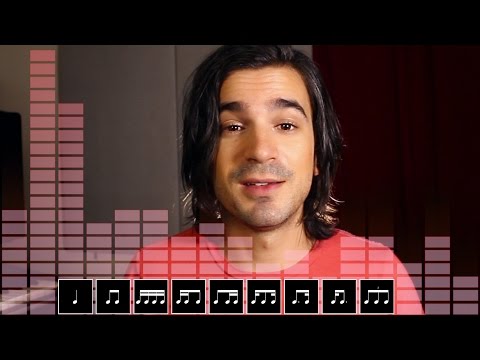
- —subdividing beats and counting rhythms before you play them
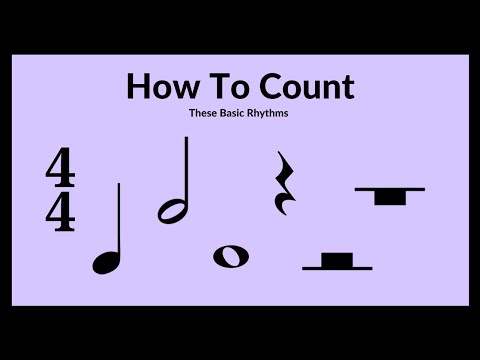
- —4/4 time, measures, quarter notes, half notes, whole notes, and rests
Next: your first open chords—Em, G, C, D, and Am—the foundation of thousands of songs.
©Music Buddy