Capo, Keys, and Chord Charts
A capo clamps across the fretboard and raises every open string equally—so the chord shapes you already know sound in a higher key. Combined with chord charts and the Nashville number system, you can learn songs quickly and transpose them on the fly.
How a Capo Transposes
With a capo on fret 2, open G shapes sound as A. Your fingers play familiar grips; the capo does the shifting. Capo on fret 3 turns G shapes into Bb, fret 5 into C, and so on—the shape stays the same; the sounding key moves up by one semitone per fret.
Music Buddy does not model capo yet. Tab and chord diagrams show the shapes you fret, not a capo shifted up the neck. Chord symbols on a real chart usually show the sounding key. When you capo, those two views diverge—use the videos below and try it on your guitar.
| Capo fret | Play shapes in… | Sounds in… |
|---|---|---|
| 0 (none) | G | G |
| 2 | G | A |
| 3 | G | Bb |
| 5 | G | C |

The I–V–vi–IV Shape Family
Most capo songs reuse one familiar grip set. Learn it in G first—then a capo simply raises where those shapes sound.
No capo — key of G:
X:1
T:I-V-vi-IV in G (No Capo)
K:G
M:4/4
L:1/2
"G"[GBd]2 "D"[DFA]2 | "Em"[EGB]2 "C"[CEG]2 ||
Play along in Music Buddy with Tab and Chords on—the diagrams match what your fingers fret.
Capo on fret 2 — same shapes, different sounding key:
Clamp the capo across fret 2, then play the same shapes as above: G, D, Em, C. A chord chart for this song would read A, E, F#m, D—one whole step higher—but your hands do not change. Nashville numbers stay 1–5–6–4 either way.
Practice the progression on your guitar with the capo in place; the interactive example above shows the fretted shapes only.
Reading Chord Charts
A chord chart shows when to change chords—not every strum. Bars (or measures) run left to right; chord symbols sit above the lyric or rhythm line.
X:2
T:Simple Chord Chart (Verse)
K:G
M:4/4
L:1/2
"G"[GBd]2 "G"[GBd]2 | "C"[CEG]2 "D"[DFA]2 | "Em"[EGB]2 "C"[CEG]2 | "G"[GBd]2 "D"[DFA]2 ||
Listen for the changes. Count along until chord switches feel natural. If a chart is written for a capo’d song, the symbols reflect the sounding chords—match them to the shape family you are holding, not necessarily to the open-key voicings in Music Buddy.
Nashville Number System
Instead of letter names, musicians often use numbers for chord function—1 is home, 4 and 5 are the usual companions, 6 is the relative minor.
In the key of G: 1 = G, 2 = Am, 3 = Bm, 4 = C, 5 = D, 6 = Em.
The famous 1–5–6–4 progression in G:
X:3
T:Nashville 1-5-6-4 in G
K:G
M:4/4
L:1/2
"G"[GBd]2 "D"[DFA]2 | "Em"[EGB]2 "C"[CEG]2 ||
The beauty of numbers: move to key of C and 1–5–6–4 becomes C–G–Am–F—same relationships, different letters. Capo or not, 1–5–6–4 is still 1–5–6–4; only the letter names on the chart change.
—why numbers transpose across keys and how guitarists use them on real charts.
Practice tip: Take one song you know and write out its chords as Nashville numbers. Then capo to a new key and play the same shape family—numbers stay constant even when letters change.
Further viewing
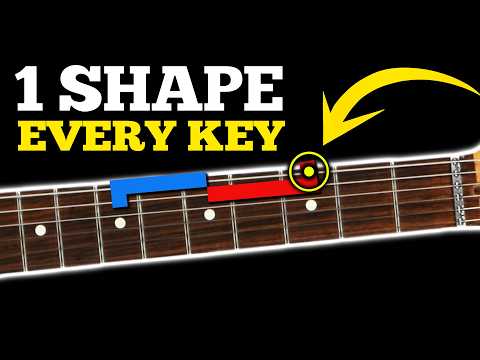
- —capo positions as a way to hear the same progression in new voicings
- —locating 1, 4, 5 and minor chords with a movable fretboard map

Next: introduction to lead guitar—your bridge toward soloing and the Lead Guitar Fundamentals series.
©Music Buddy