
The Major Scale
The pentatonic lessons removed two "risky" notes from the major scale. Now we bring the full seven-note palette back—more color, but you need to know what chords are underneath you.
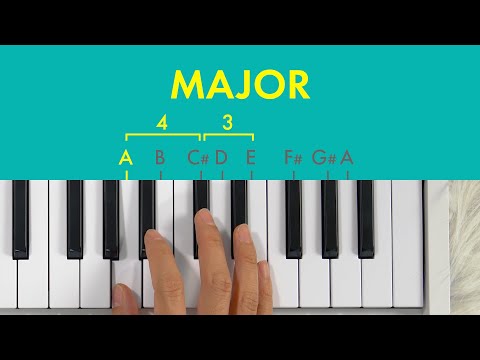
Every major scale shares the same step pattern: whole, whole, half, whole, whole, whole, half (W-W-H-W-W-W-H). On guitar, a half step is one fret; a whole step is two.
Here is C major in one octave:
X:1
T:C-Major Scale (One Octave)
K:C
L:1/4
"C"C D E F G A B c ||
And two octaves in eighth notes:
X:2
T:C-Major Scale (Two Octaves)
K:C
M:4/4
L:1/8
"C"C D E F G A B c | d e f g a b c'2 ||
Each example is playable in Music Buddy. Turn on the Tab toggle to see where the notes sit on the fretboard. Use the Chords toggle on the one-octave example to see the C major chord shape.
Play both slowly. Notice F and B—the notes the pentatonic scale left out. They add color but can clash if you land on them carelessly over a C chord.
Hearing the Scale in Thirds
Playing the scale in thirds (every other note) helps you hear how the notes relate—not just as a finger exercise:
X:3
T:C-Major Scale in Thirds
K:C
M:4/4
L:1/8
C E D F E G F A | G B A c B d c e | d f e g f a g b | a c' b d' c'4 ||
Practice tip: Learn one position at a time. Name the root (C here) and the major third (E) before you memorize the whole shape.
Further viewing
- (Desi Serna)—connecting the scale to chords and keys
- (Andrew Huang)—how scales and chords fit together

Next: the simplified way to choose which major scale to play over a song.
©Music Buddy