
Pentatonic Major Scale
Minor pentatonic drives most blues and rock solos. Major pentatonic is the brighter counterpart—your go-to over major chords and many country and pop lines.
In C major, the root sits at the 8th fret on the low E string:
X:1
T:C-Major Pentatonic
K:C
L:1/4
"C"C D E G A c ||
Five notes: C (root), D (2nd), E (major 3rd), G (5th), A (6th). No F or B—the same two "risky" notes removed from the full major scale.
Each example is playable in Music Buddy. Turn on the Tab toggle to locate notes on the fretboard. Use the Chords toggle on the scale example to see the C major chord shape.
Same Shape, Different Root
C major pentatonic uses the exact same notes as A minor pentatonic—only the starting note changes:
X:2
T:A-Minor Pentatonic (same notes)
K:Am
L:1/4
"Am"A c d e g a ||
Play both scales. Starting on C sounds bright; starting on A sounds darker—even though every pitch is identical. Context and which note you treat as home matter more than the shape on the neck.
(Dustin Hofsess) demonstrates this on the fretboard.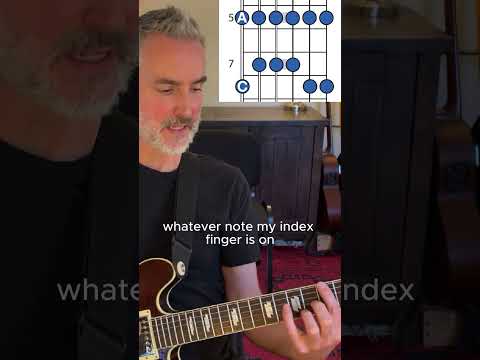
Rule #3 (Briefly)
Over a C major chord, C major pentatonic is the obvious choice. A minor pentatonic also works—the notes overlap heavily—but if you lean on A as home, the solo can sound minor over a major chord.
The fix is simple: over C major, emphasize C, E, and G (the chord tones) no matter which pentatonic shape you are playing. Think notes, not just shapes.
Modes and relative minor go deeper in later lessons. For now, remember: major pentatonic over major harmony, and land on chord tones when you want the clearest sound.
A Simple Phrase
Four bars in C major pentatonic—ending on C:
X:3
T:Major Pentatonic Phrase
K:C
M:4/4
L:1/8
"C"C D E G A G E D | C D E G A c A G | E2 D2 C4 | z8 ||

Practice tip: Over a C major backing, solo with C major pentatonic and deliberately end phrases on C, E, or G. Then try A minor pentatonic over the same track—but still aim for those three notes at phrase endings.
Further viewing
- (Paul Davids)—connecting major and minor shapes

Next up: major pentatonic exercises.
©Music Buddy