
The Mighty Pentatonic Scale
The last lesson showed why pentatonic scales work: two tense notes are removed from the major scale, leaving five safe ones. Now let's look at the two versions you will use most—major and minor pentatonic.
The difference comes down to one note: the third. Major pentatonic has a major third; minor pentatonic has a minor third. In the key of C, that means E vs. Eb. That single note changes the whole mood.
X:1
T:C-Major Pentatonic
K:C
L:1/4
"C"C D E G A c ||
X:2
T:C-Minor Pentatonic
K:Cm
L:1/4
"C"C _E F G _B c ||
Each example is playable in Music Buddy. Turn on the Tab toggle if you need to see where the notes fall on the fretboard. Use the Chords toggle to see the underlying chord shapes.
Play both scales slowly and listen for the difference—bright major third (E) versus darker minor third (Eb).
and shows how each fits different songs.
Rule #2
- Rule #2: Play major pentatonic over major chords, and minor pentatonic over minor chords.
Treat this as a guideline, not a law. The real rule is: play what sounds good.
Minor pentatonic gets used more often—especially in rock and blues—because it also works over power chords and ambiguous harmony. Its b3 and b7 notes add a bluesy edge even when the underlying chord is major.
The Blue Note
Add a b5 (the "blue note") to minor pentatonic for a classic blues sound. In A minor, that is Eb (_e in the example below):
X:3
T:A-Minor Pentatonic with Blue Note
K:Am
M:4/4
L:1/8
A c d e g e d c | A c d _e e d c A | e g a g e d c A | A8 ||
The second measure hits the blue note (_e) before resolving back to the pentatonic tones.
Mixing Major and Minor
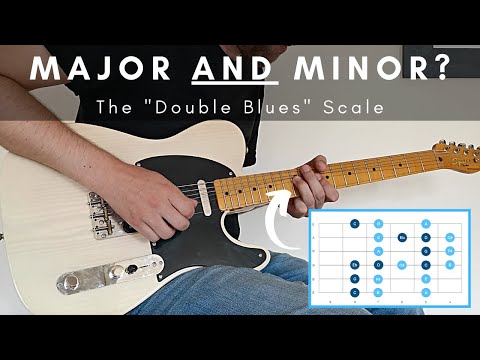
Over major or dominant chords, blending both pentatonics adds color. Over C major, use C major pentatonic (C, D, E, G, A) and occasionally slip in Eb from C minor pentatonic for a bluesy twist. B.B. King and Eric Clapton built careers on this kind of mixing.
.
Practice tip: Learn one pentatonic shape well before chasing all five box patterns. Find the root note in the shape first—that is your home base.
Further viewing
- (Paul Davids)—shapes, root notes, and playing musically
- (Jules Guitar)—why guitarists rely on pentatonic scales


Next up: the minor pentatonic scale in depth.
©Music Buddy