Arpeggios as Melodic Roadmaps
Scales give you a pool of notes. Arpeggios give you a map—every note is a chord tone, so you always know where "home" is for the current chord.
Arpeggio vs Scale Over Changes
Compare running the C major scale versus outlining each chord:
X:1
T:Scale Over Two Chords (Generic)
K:C
M:4/4
L:1/8
"C" C D E F G A B c | "Am" c B A G F E D C ||
X:2
T:Arpeggios Over Two Chords (Harmonic)
K:C
M:4/4
L:1/8
"C" C E G E c G E C | "Am" A c e c a e c A ||
The arpeggio version immediately tracks the harmony. Each example is playable in Music Buddy—turn on Tab for fretboard positions and Chords to see the underlying shapes.
Major and Minor Arpeggios
X:3
T:Major and Minor Triad Arpeggios
K:C
M:4/4
L:1/4
"C" C E G c | "F" F A c f | "Am" A c e a | "Dm" D F A d ||
Connecting Arpeggios at Chord Changes
Find the nearest chord tone in the new chord—smooth voice leading:
X:4
T:Voice Leading Through C-Am-F-G
K:C
M:4/4
L:1/8
"C" C E G c | "Am" e c A e | "F" c A F c | "G" d B G d ||
- C to Am: high C drops to E (Am's fifth)
- Am to F: C is shared between both chords
- F to G: C moves up to D (G's fifth)
A Flowing Arpeggio Line
Good lines change direction and land on strong tones at each change:
X:5
T:Flowing Line Over I-vi-IV-V
K:C
M:4/4
L:1/8
"C" c G E c | "Am" A c e a | "F" f c A F | "G" G B d g | "C" c2 z2 ||
Blending Arpeggios and Scale Motion
Pure arpeggios can sound mechanical. Mix in stepwise passing tones:
X:6
T:Arpeggio Jumps with Scale Fill
K:C
M:4/4
L:1/8
"C" C D E F | G A G E | c B A G | E D C2 ||
Arpeggio skips (C–E, G–c) outline the chord; stepwise runs (C–D–E–F) add melodic flow.
I-IV-V-I with Arpeggios
X:7
T:Arpeggio Solo Over I-IV-V-I
K:C
M:4/4
L:1/8
"C" c e d c | G E D E | "F" F A c f | e d c A | "G" G B d g | f d B G | "C" E D C2 ||
Each measure emphasizes chord tones while scale motion connects them.
Practice Exercise: Pure Arpeggios
Outline a ii-V-I using only arpeggio notes:
X:8
T:Arpeggio Exercise (I-vi-ii-V)
K:C
M:4/4
L:1/8
"C" C E G c e g c2 | "Am" A c e a c e a2 | "Dm" D F A d f a d2 | "G" G B d g b d g2 | "C" c4 z4 ||
Start slowly. Then try descending arpeggios, different starting tones, and passing tones between chord tones.
When you know your arpeggios cold, you can explore freely—always able to anchor back to a chord tone.
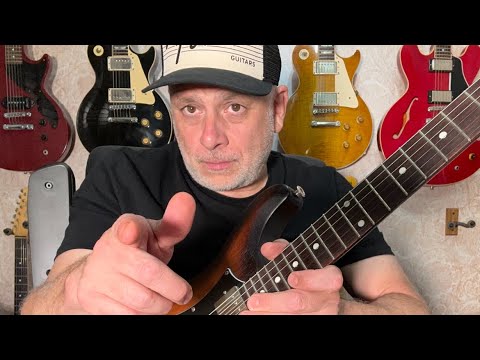
.
Practice tip: For any progression, play each chord's arpeggio once through before you solo. That thirty-second warm-up maps the fretboard to the harmony.
Further viewing
- (Corey Congilio)—dominant 7 arpeggios in blues context

Next: why pentatonic scales are so forgiving—and when to move beyond them.
©Music Buddy