The Major Scale and Diatonic Harmony
The major scale is not just a practice pattern—it is a harmonic system. Stack thirds on each scale degree and you get every chord in the key.
The Major Scale
W – W – H – W – W – W – H (whole and half steps):
X:1
T:C Major Scale
K:C
M:4/4
L:1/4
C D E F | G A B c ||
Each example is playable in Music Buddy. Use the Tab toggle to find notes on the fretboard.
Diatonic Chords
Take every other note from the scale, starting on each degree:
X:2
T:Diatonic Triads in C Major
K:C
M:4/4
L:1/2
"I" [CEG] | "ii" [DFA] | "iii" [EGB] | "IV" [FAc] | "V" [GBd] | "vi" [Ace] | "vii°" [Bdf] ||
The pattern repeats in every major key:
- I, IV, V — major
- ii, iii, vi — minor
- vii° — diminished
Why This Matters for Soloing
A progression like C – Am – F – G is not random—it is diatonic harmony in C major. The C major scale covers all the notes, but running it up and down sounds the same over every chord. Emphasize each chord's tones instead:
X:3
T:Outlining C-Am-F-G
K:C
M:4/4
L:1/8
"C" C E G E | "Am" A c e c | "F" F A c A | "G" G B d B ||
Turn on Chords to see the shapes as you play through each bar.
Functional Roles
- I (tonic) — home, resolution
- IV (subdominant) — departure from home
- V (dominant) — tension, pulls back to I
- vi — relative minor; shares notes with I
The V–I cadence is the strongest resolution in tonal music:
X:4
T:V-I Cadence
K:C
M:4/4
L:1/4
"G" G B d B | "C" c e g c ||
The B in G major (the leading tone of C) wants to resolve up to C.
The ii-V-I Progression
The most important jazz progression—and common in pop and rock too:
X:5
T:ii-V-I in C
K:C
M:4/4
L:1/2
"Dm" [DFA] | "G" [GBd] | "C" [CEG]2 ||
Target D-F-A over Dm, G-B-D over G, C-E-G over C:
X:6
T:Melody Over ii-V-I
K:C
M:4/4
L:1/8
"Dm" D F A c | "G" d B G F | "C" E D C2 ||
Relative Minor
C major and A minor share the same notes—different starting point, different feel:
X:7
T:C Major and A Minor — Same Notes
K:C
M:4/4
L:1/4
"C" C D E F G A B c | "Am" A B c d e f g a ||
That is why A minor pentatonic works over C major progressions.
—the same stacking idea that builds diatonic triads.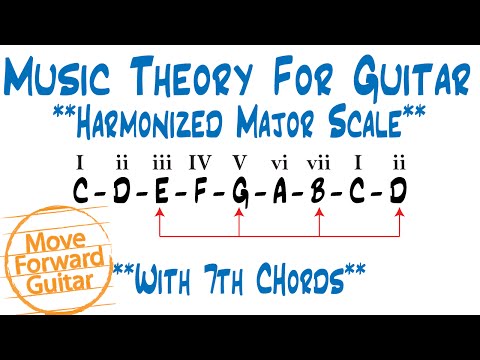
Practice tip: Take a I-vi-IV-V progression in one key. Write out the chord tones for each chord before you solo—even thirty seconds of mapping saves minutes of guessing on the fretboard.
Further viewing
- (David Bennett)—why V wants to resolve to I
- —diatonic harmony in the most important jazz cadence

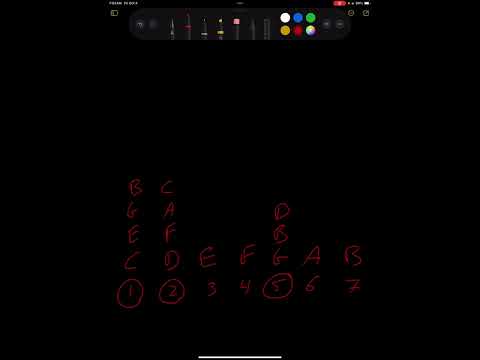
Next: using arpeggios as melodic roadmaps through chord changes.
©Music Buddy