Minor Keys and Modal Harmony
Major-key harmony follows predictable patterns. Minor keys and modes add different colors—but the same principle applies: target the chord tones of whatever harmony is playing.
Natural Minor
Same notes as the relative major, different root:
X:1
T:A Natural Minor Scale
K:Am
M:4/4
L:1/4
A B c d | e f g a ||
The b3, b6, and b7 give minor its darker sound. Each example is playable in Music Buddy—use Tab to find scale positions.
Diatonic Chords in A Minor
X:2
T:Chords in A Natural Minor
K:Am
M:4/4
L:1/2
"i" [Ace] | "ii°" [Bdf] | "III" [CEG] | "iv" [DFA] | "v" [EGB] | "VI" [FAc] | "VII" [GBd] ||
Pattern: i, iv, v minor; III, VI, VII major; ii° diminished.
Turn on Chords to see each shape as you play through the progression.
The Harmonic Minor Fix
Natural minor's v chord (Em) lacks pull back to i. Raise the 7th to get harmonic minor:
X:3
T:A Harmonic Minor Scale
K:Am
M:4/4
L:1/4
A B c d | e f ^g a ||
Now E major (with G#) creates a strong V–i resolution:
X:4
T:V-i in Harmonic Minor
K:Am
M:4/4
L:1/2
"E" [^G B E] | "Am" [A c e]2 ||
Use natural minor over i and iv; switch to harmonic minor over the V chord.
i-iv-v in A Minor
X:5
T:i-iv-v Progression
K:Am
M:4/4
L:1/8
"Am" A c e a | "Dm" d f a d' | "Em" e g b e' | "Am" a2 z2 ||
Target each chord's minor third: C (Am), F (Dm), G (Em).
Modes: Same Notes, Different Center
Modes are scales with a specific tonal center. Two you will encounter often:
Dorian — minor with a natural 6th (brighter than natural minor):
X:6
T:D Dorian Scale
K:Dm
M:4/4
L:1/4
D E F G | A B c d ||
Mixolydian — major with a b7 (bluesy major):
X:7
T:G Mixolydian Scale
K:G
M:4/4
L:1/4
G A B c | d e f g ||
Modal Vamps
A two-chord vamp often establishes a mode rather than a full key:
X:8
T:D Dorian Vamp (Dm-Em)
K:Dm
M:4/4
L:1/8
"Dm" D F A d | c A F D | "Em" E G B e | d B G E ||
Emphasize B (Dorian's natural 6th)—the note that separates Dorian from natural minor.
X:9
T:Mixolydian Vamp (G-F)
K:G
M:4/4
L:1/8
"G" G B d g | f d B G | "F" F A c f | e c A F ||
Emphasize F (Mixolydian's b7)—not F# as in G major.
Practical Checklist
When you encounter a progression:
- Identify the center — major, minor, or modal?
- Choose the scale — natural minor, harmonic minor over V, or the relevant mode
- Target the characteristic tone — b3 in minor, the mode's unique degree in modal vamps
Practice tip: Play a Dm–Em vamp and solo twice—once emphasizing B (Dorian) and once with Bb (natural minor). The difference in brightness is immediate.
Further viewing
- (Rick Beato)—interval patterns and how each mode feels
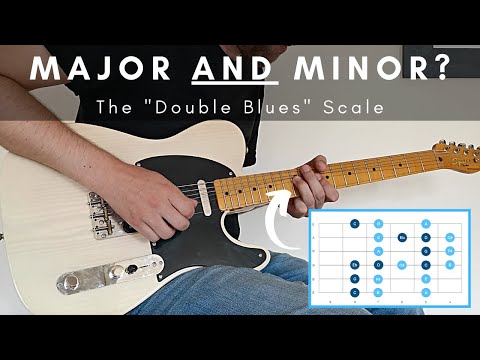
- (Jules Guitar)—minor-key color in soloing

Next: seventh chords and the guide tones that drive jazz harmony.
©Music Buddy