Pentatonic Scales and Harmonic Safety
Pentatonic scales are the guitarist's safety net—five notes that rarely clash with underlying chords. Understanding why they work helps you use them deliberately instead of by habit.
Five Notes, Fewer Wrong Choices
Major pentatonic (1-2-3-5-6):
X:1
T:C Major Pentatonic
K:C
M:4/4
L:1/4
C D E G A c ||
Minor pentatonic (1-b3-4-5-b7):
X:2
T:A Minor Pentatonic
K:Am
M:4/4
L:1/4
A c d e g a ||
Each example is playable in Music Buddy. Turn on Tab to see fretboard positions.
What's Missing—and Why That Helps
The full C major scale includes F and B—each a half-step from a chord tone in C major. Played carelessly, they create tension:
X:3
T:C Major Scale (With Tense Notes)
K:C
M:4/4
L:1/4
C D E F G A B c ||
Remove F and B and you get the pentatonic—same key, fewer clashes:
X:4
T:C Major Pentatonic (F and B Removed)
K:C
M:4/4
L:1/4
C D E G A c ||

Same Notes, Different Root
C major pentatonic and A minor pentatonic share the same pitches:
X:5
T:C Major vs A Minor Pentatonic
K:C
M:4/4
L:1/4
"C" C D E G A c | "Am" A c d e g a ||
That is why A minor pentatonic works over C major progressions—and why both are hard to mess up.
Pentatonic Over a Chord
Over C major, the pentatonic hits root, third, and fifth directly:
X:6
T:C Major Pentatonic Over C Chord
K:C
M:4/4
L:1/8
"C" C D E D | E G A G | E D C2 ||
Turn on Chords to see the C major shape alongside the line.
When Pentatonic Is Enough—and When It Isn't
Pentatonic is ideal for blues, rock, fast passages, and uncertain harmony. It sounds safe—but limited. Adding the full scale's F and B brings color and stronger resolution:
X:7
T:Pentatonic vs Full Scale
K:C
M:4/4
L:1/8
"Pent" C D E G | A G E D | C2 | "Full" C D E F | G A B c | B A G F | E D C2 ||
The full-scale version has more melodic variety because it uses every diatonic tone.
Switching Pentatonics Over Changes
Match the pentatonic to each chord's root:
X:8
T:Pentatonic Over C-Am-F-G
K:C
M:4/4
L:1/8
"C" C D E G | "Am" A c e a | "F" F G A c | "G" G A B d ||
- Over C: C major pentatonic
- Over Am: A minor pentatonic
- Over F: F major pentatonic
- Over G: G major pentatonic

Practice tip: Learn one pentatonic shape thoroughly. Find the root first—that is your home base—before chasing all five box patterns.
Further viewing
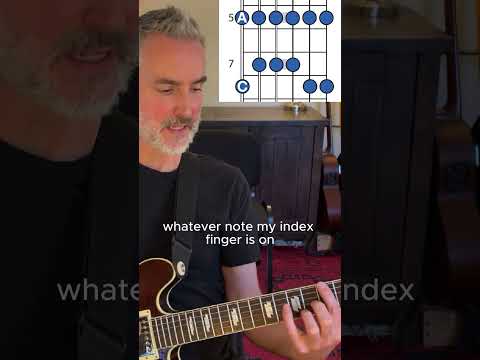
- (Paul Davids)—shapes, roots, and playing musically
- (Dustin Hofsess)—relative major/minor on the fretboard

Next: landing on chord tones intentionally—the skill that separates scale runs from real improvisation.
©Music Buddy